


Pirates Ho! by Eleanor Swift-Hook
It is a great pleasure to welcome historical fiction writer Eleanor Swift-Hook back to my blog today to discuss seventeenth century England and the pirates who patrolled the waves. Thank you for your time today, Eleanor.
It is lovely to be back on your blog today, Val. It is interesting how terminology changes its meanings over time. For example, today if you refer to ‘the Dunkirk spirit’ it conjures up the idea of working together, against the odds. But go back four hundred years and you would have found people would have taken a very different meaning from the phrase. Because if you lived in England in the first part of the 17th Century, any mention of Dunkirk would come with a shudder.
Dunkirkers were pirates.
Very successful pirates.
And one of their main targets was English merchant ships, because the English were the allies of the Dunkirkers’ main enemy. the Dutch.
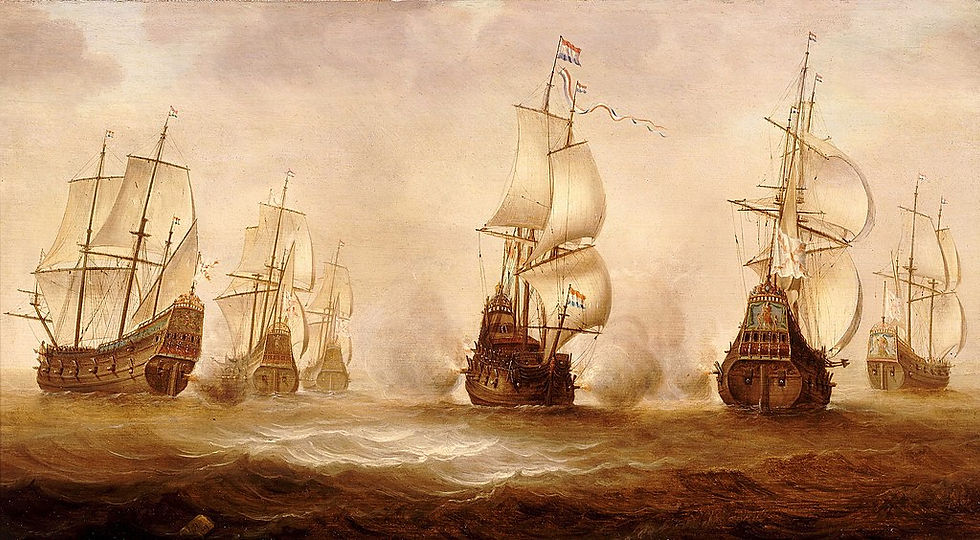
Long story short, the Protestant Dutch had been fighting for freedom from Catholic Spanish Habsburg rule since 1568 in a war that would become known as The Eighty Years War. As well as attacking the Dutch on land and in naval actions, the Spanish licenced the Dunkirkers to attack their civilian shipping, and any sailing to their ports were fair game as well.
To try and keep them from doing so, the Dutch maintained a blockade on Dunkirk all summer, but in the winter they had to withdraw because of the risk of storms. In 1625 an early storm caught the Dutch off guard and the Dunkirkers escaped to wreak havoc. In the next two weeks they sank over 150 vessels including the majority of the Dutch fishing fleet and 20 warships, which were sunk or captured.

This year also marked the point at which the Dunkirkers did their very worst to the English merchant fleet. Between 1625 and 1630, It is estimated that out of every five ships that sailed from England, one would fall prey to Dunkirkers. That meant 20% of the English merchant fleet at this time was lost to their piracy!
One other thing to bear in mind when thinking of pirates in this era is that the romantic image of the pirate captain standing on deck beside a ship's wheel, is completely anachronistic for the 17th century. At that time, the method of connecting a wheel to the rudder had not been invented and a ship was steered by a pole attached to the tiller, called a whipstaff.

This awkward device took a lot of physical strength to move about and the man steering with it often had only a small slit of an opening to see through, and had to rely on instructions called by the ship’s master. It makes tales of maritime derring do much more impressive when you realise how basic and clumsy this method was, and yet using it ships executed naval impressively complex and coordinated manoeuvres.
In The Fugitive’s Sword, Philip Lord, a young man in his mid-teens, is fleeing charges of treason falsely placed against him in England and is forced to become a mercenary soldier. Then infiltrating an enemy stronghold leads to his being compelled to join the crew of a Dunkirker!
It is a life-changing adventure and is now available as an audiobook with superb narration by Andrea Zuvich, herself a historian of the 17th Century.

The Author
Eleanor has an ongoing fascination with the social, military and political events that unfolded during the Thirty Years’ War and the Wars of the Three Kingdoms. She lives in County Durham and loves writing stories woven into the historical backdrop of those dramatic times.
The Links
Website: eleanorswifthook.com
X/Twitter: twitter.com/emswifthook
The Books
The Fugitive’s Sword is the first book in Lord’s Learning. The series traces the story of Philip Lord, a teenage youth forced to flee into exile under accusations of treason and thrown into the brutality of the Thirty Years War.
Lord’s Legacy Philip Lord, now a mercenary commander with a reputation for ruthlessness gained in the wars raging across Europe, returns to England at the opening of what will become the First English Civil War, with a treason charge hanging over his head, in search of the truth about his identity and heritage


After reading the Valpenny post on 'Pirates Ho' by Eleanor Swift Hook, I found its focus on pirate-themed storytelling and character-driven adventure interesting. It highlights tone and narrative style, making me curious about the book’s direction and audience's overall impression. On a different note, while working through academic tasks, services like New Assignment Help often come up for students seeking guidance with Assignment Writing support via link I think having structured support can help learners better understand essay requirements, especially when balancing research, formatting, and clarity, which often feels overwhelming during tight deadlines in university environments today in practice contexts
That post does a great job explaining how Pirates Ho! highlights the real danger and impact of Dunkirk pirates on English shipping back in the 1600s in a way that made me picture the hard life on those seas. While reading, I remembered a time I fell behind in my classes and needed expert help with online course completion during a crowded term when I had too much going on. It made me think how having support can make tough challenges feel more manageable and even turn them into learning moments.
I enjoyed how the post explains that seventeenth century pirates like the Dunkirkers were a real threat to English ships and not just the romantic figures we often imagine. When I was stuck revising for tests I sometimes thought of mathematics exam takers juggling numbers under pressure while trying to picture historic battles at sea in my head. The way the article links history and everyday life made me think history can feel real when you connect it to your own school memories.